
How often do you change your passwords or check your bank account balance
and assume the numbers are safe just because you’ve been a loyal customer for over a decade?
But all of a sudden you realize someone stole your identity and your money but the bank you have been trusting for many years is not protecting you.
I used to be that person. I’ve traveled solo across the world, built a business from scratch, and navigated the complexities of being an immigrant in the United States. I thought I knew how to handle risks. But then, the unthinkable happened. In a matter of days, the financial security I had built over 12 years vanished through a series of calculated, silent attacks.
If you think your bank has your back just because you’ve been with them for over a decade, think again. Trust is a beautiful thing… until the system fails you.
I lost over $16,000 to fraud. But more than the money, I lost my sense of safety and over 100 hours of my life trying to get it back. Today, I’m sharing my story and the essential identity theft protection tips you need to implement right now, so you never have to experience the nightmare I lived through.
The Moment the System Broke
It didn’t start with a bang. It started with a quiet notification.
I had been banking with the same institution: a major household name for twelve years. My personal savings, my business accounts, and my daily operations were all under one roof. I felt secure. But a fraudster managed to slip through the cracks of their “secure” system and systematically dismantled my finances.
Here is the breakdown of the damage:
- $5,500 was withdrawn directly from my savings account.
- $3,000 was sent via a Western Union transfer I never authorized.
- $7000+ was charged across my credit cards in a shopping spree I didn’t participate in.
In total, over $16,000 was gone. Just like that.
Imagine being on vacation, the day before your birthday and a notifications pops up: ” your purchase for $1,468.72 at Best Buy was approved”. The problem is that i was nowhere near a Best Buy, i was in the middle of Zanzibar about to start a Spice Tour and the credit card was with me. But this was JUST the beginning.
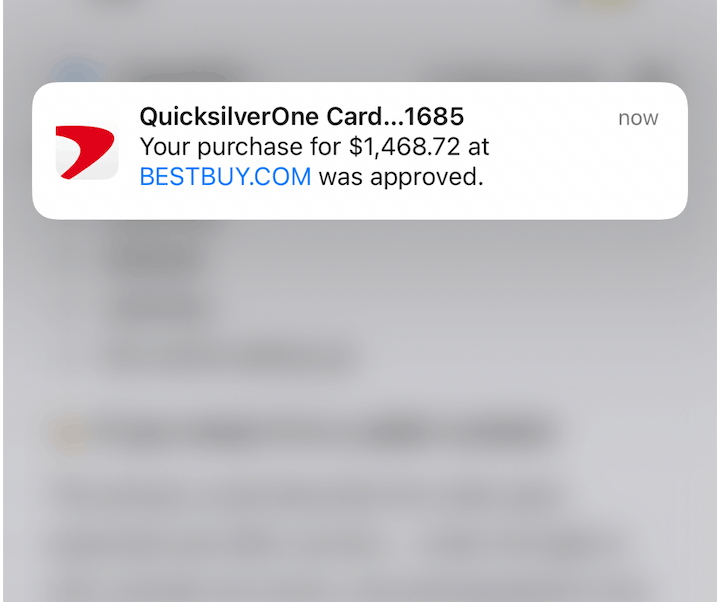
The feeling of financial violation is something no one prepares you for, especially when you’ve done everything “right”.
And that’s when i had to initiate the battle. I realized I had to escalate the situation beyond standard channels. After two months of trying to resolve the issue without success, I sent a formal letter to Richard Fairbank at Capital One’s headquarters to ensure the case received the attention it required.
The Invisible Cost: 100 Hours and 50 Representatives
When we talk about fraud, we usually focus on the dollar amount. But we rarely talk about the invisible cost.
Once the money is gone, the real work begins. Because you don’t have the certainty you’ll get them back. I spent over 100 hours on the phone, visiting the bank’s branch and filing police reports. Maybe a lot more than that. I spoke with over 60 different representatives. Each time, I had to repeat my story, verify my identity, and explain the timeline of events. It felt like a full-time job I never applied for, and the “salary” was just the hope of getting my own money back. Do you know what that actually means?
I had to manage:
- Credit Bureaus: Freezing and unfreezing reports.
- Police Reports: Filing official documentation to prove the crime.
- Bank Investigations: Navigating a labyrinth of departments that didn’t seem to communicate with each other.
The mental toll was exhausting. As a business owner and solo traveler, my momentum is my lifeblood. This fraud didn’t just take my money; it took my focus, my energy and put my life on hold. It made me question every notification on my phone and more.
Your Proactive Cybersecurity Checklist
Living through this taught me a hard truth: Cybersecurity is no longer optional. You cannot rely on a bank’s “fraud protection” as your only line of defense. You have to be your own advocate.
Based on my $16k lesson, here are the identity theft protection tips that are now non-negotiable for me: and should be for you too.
1. Master Your Password Management
If you are still using the same password (or even short weak passwords) for your bank as you do for your Netflix and all your other accounts, you are leaving the door wide open.
- Use Unique Passwords: Every single account needs a different, complex password.
- Get a Password Manager: Tools like Passwords, 1Password or LastPass are lifesavers. They generate and store unhackable passwords so you don’t have to remember them.
2. Multi-Factor Authentication (MFA) Everywhere
This is the single most important step you can take. Even if a hacker gets your password, MFA requires a second form of verification (like a code sent to your phone or an app). I use the Google Authenticator App for mostly everything and RSA authenticator for my new bank, Chase.
- Extra tip: Avoid SMS-based MFA if possible, as “SIM swapping” is a common way hackers bypass this. Use authenticator apps instead.
SMS-based MFA sends login codes to your phone, but hackers can hijack your number through SIM swapping and receive those codes instead of you. Using an authenticator app like Google Authenticator is safer because the codes are generated directly on your device and can’t be intercepted.
3. Protect Your Physical and Digital Devices
We often forget that our hardware is a vulnerability point.
- Avoid Public USB Charging Ports: “Juice jacking” allows hackers to steal data through charging cables in airports or cafes. Use a wall outlet or a portable power bank.
- Update Your Software: Those annoying “update available” notifications? They often contain security patches for newly discovered vulnerabilities. Install them immediately.
4. Be Skeptical of Public Wi-Fi
As a travel storyteller, I’m always on the go. But I’ve learned the hard way: never access sensitive accounts on public Wi-Fi.
- If you must use it, use a VPN (Virtual Private Network) to encrypt your data. It creates a secure tunnel for your information, keeping it hidden from prying eyes on the same network. I recently purchased Nord.
When I Realized My Data Was Already Circulating
5. Have you ever heard of ‘Have i been pwned’?
This was an eye opening website for me. Have I Been Pwned is a free tool that lets you check if your email or passwords have been exposed in known data breaches. You enter your email, and it searches a massive database of leaked data from hacked websites to tell you:
- Which breaches your email appeared in
- What kind of data was exposed (passwords, names, etc.)
It doesn’t fix anything for you—but it gives you clarity, so you can:
- Change compromised passwords
- Turn on stronger security (like authenticator apps)
- Understand where your data may already be circulating and even ask those institutions to delete your data
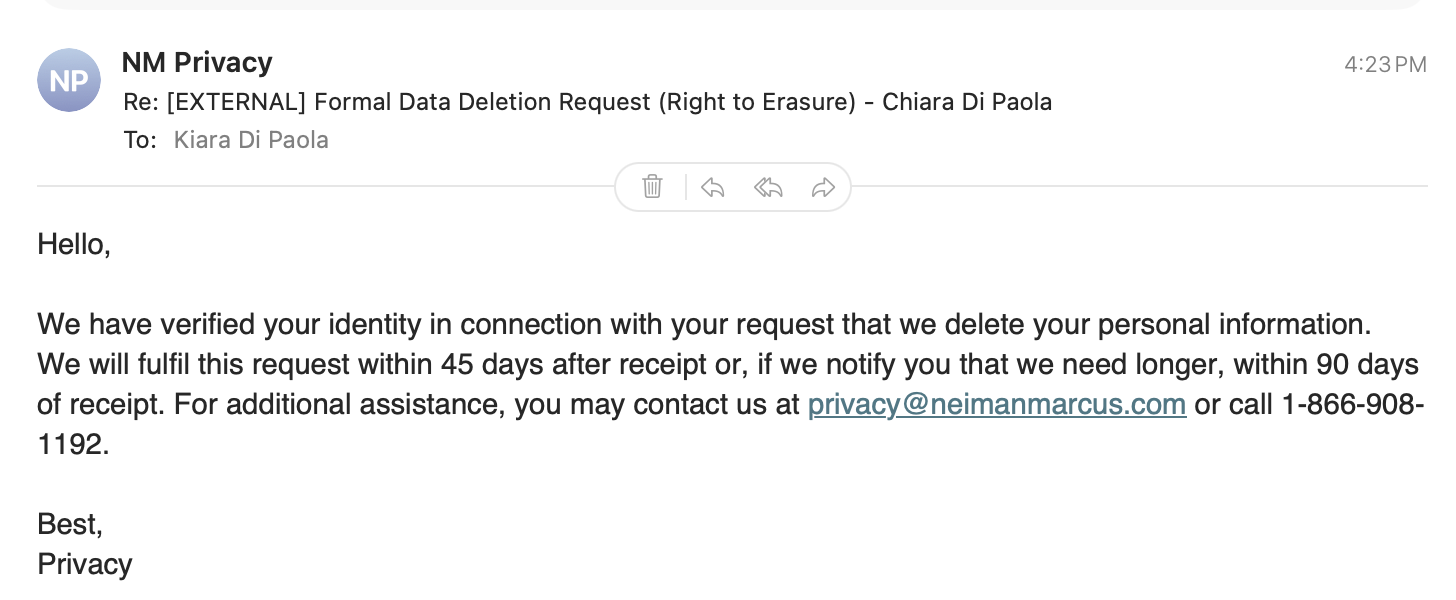
After checking whether my e-mails had been exposed, I made a conscious decision to contact the companies involved in those data breaches, asking for my personal data to be permanently removed from their systems.
6. Secure Your Email Gateway
Your email is the “master key” to your digital life. If someone gets into your email, they can reset the passwords for your bank, your social media, and your business accounts.
- Enable the strongest security settings possible.
- Be hyper-aware of phishing emails. If an email asks you to “click here to verify your account,” go to the official website directly instead of clicking the link.

Whether you’re working from a cafe in Manhattan or in Siwa, Egypt your data needs protection.
7. Run a malware scan on your phone and laptop
Using a trusted tool like Malwarebytes can help you detect hidden threats such as spyware, trojans, or
malicious apps that may be running in the background without your knowledge.
They can quietly:
- Monitor your activity
- Capture login details
- Interfere with your accounts
Running a full scan on both your laptop and phone is like doing a deep health check for your digital life. It allows you to identify and remove anything suspicious, giving you back control and peace of mind—especially after experiencing fraud or unusual activity.
Tip: Don’t just run it once. If something serious happened, scan again after a few days, and make sure your apps and operating systems are fully updated.
8. Take advantage of Mastercard’s free identity protection plan
Mastercard offers a free identity protection service that many people don’t even realize they already have access to.
Through their protection platform, you can:
- Monitor your personal information for potential data breaches
- Receive alerts if your data appears on the dark web
- Get support in case your identity is compromised
After everything I went through, this became less about “extra security” and more about being proactive instead of reactive.
It’s one of those quiet tools that runs in the background—but can make a real difference if something happens.
👉 If you have a Mastercard, it’s worth checking if you’re eligible and activating it.
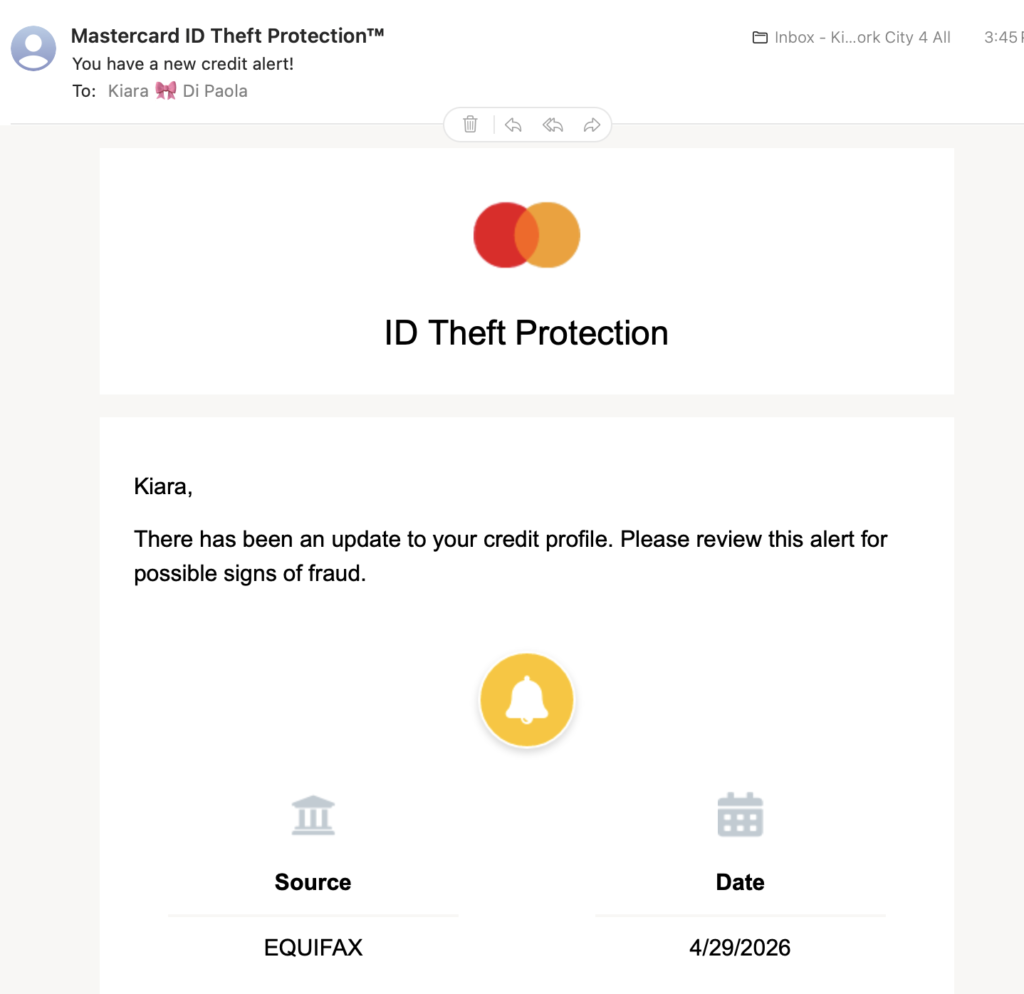
This is what it looks like if Mastercard sends you an alert for possible signs of fraud.
The “Extra Steps” for Maximum Security
If you want to go beyond the basics and truly harden your defenses, there are a few advanced steps I’ve implemented since my fraud case.
Request an IRS IP PIN
Did you know someone can file a tax return in your name and steal your refund? An Identity Protection PIN (IP PIN) is a six-digit number assigned to eligible taxpayers that helps prevent the misuse of their Social Security number on fraudulent federal income tax returns. It’s an extra layer of protection specifically for your tax identity.
Not everyone can request it in every situation—but most people can. Here’s how it works:
- Anyone can voluntarily opt in through the IRS “Get an IP PIN” tool (you just need to verify your identity online).
- It’s automatically issued if the IRS detects suspicious activity or confirms you were a victim of tax-related identity theft.
So yes—you don’t need to be a victim to request one.
Secure Your ID.me Account
Many government agencies, including the IRS and Social Security Administration, use ID.me for identity verification.
- Set up your account before someone else does it for you.
- Enable 2FA on this account and monitor it closely.
Consider Identity Protection Plans
After my ordeal, I started looking into long-term solutions. While monthly subscriptions are common, some providers like Equifax offer more robust, long-term plans. It’s worth evaluating if the peace of mind is worth the investment for your specific situation. E-mail me at hello@kiariladyboss.com and i can share more about the protection plan i am using now.
If you are a victim of identity theft or fraud, take these steps immediately:
- Freeze your credit with all three bureaus: Equifax, Experian, and TransUnion
This prevents anyone from opening new accounts in your name. - File a police report
This creates an official record, which can be helpful when disputing fraudulent activity. - Report the fraud to the FTC via IdentityTheft.gov
This step helps you generate a recovery plan and formal documentation. - Request an IRS IP PIN from the Internal Revenue Service
This protects your tax filings from being used fraudulently. - Enable Multi-Factor Authentication (MFA) on all accounts
Prioritize email, banking, and social media accounts for stronger protection. - Check if your data has been exposed in breaches
Use Have I Been Pwned as mentioned above to see if your email or personal data has been compromised. - Secure your Social Security account
- Create or review your account via Login.gov / SSA
- Report fraud to the Social Security Administration Office of Inspector General
Awareness Over Fear
I didn’t write this to scare you. I wrote this to empower you.
It’s about taking back control, step by step, with clarity and intention.
And the reality is, this problem is only getting bigger. In 2026, identity theft reports increased in 45 states over the last year, with Miami and Baton Rouge reporting the highest rates.
I’ve traveled to countries that people labeled “dangerous” and felt completely safe. Yet, I was robbed while sitting in my own home, protected by a billion-dollar banking system. Safety isn’t always where we think it is, and risk doesn’t always look like a dark alley.
This experience didn’t make me stop traveling or stop running my business. It made me intentional.
Your reaction to a threat matters just as much as the threat itself. The moment you pause, question a suspicious email, and ground yourself in these security practices, you’ve already won. You’ve stepped out of their system of fear and into a system of control.
We spend so much time planning where we go, what we do but not enough protecting who we are.
I’m starting a series on cybersecurity —at home and while traveling— so you can move with more awareness, not fear. Follow @kiariladyboss to stay updated.
Disclaimer: This post is based on my personal experience and does not constitute professional legal or financial advice. Always consult with a cybersecurity expert or financial advisor for your specific needs.